Drive down almost any road in Northeast Ohio right now.
Look at parking lots.
Look at people’s yards.
They’re still there.
And then look a little closer.
Look at highway medians.
Look at the edges of wooded areas.
Look around stormwater basins, vacant lots, and unmaintained spaces.
They’re there too.
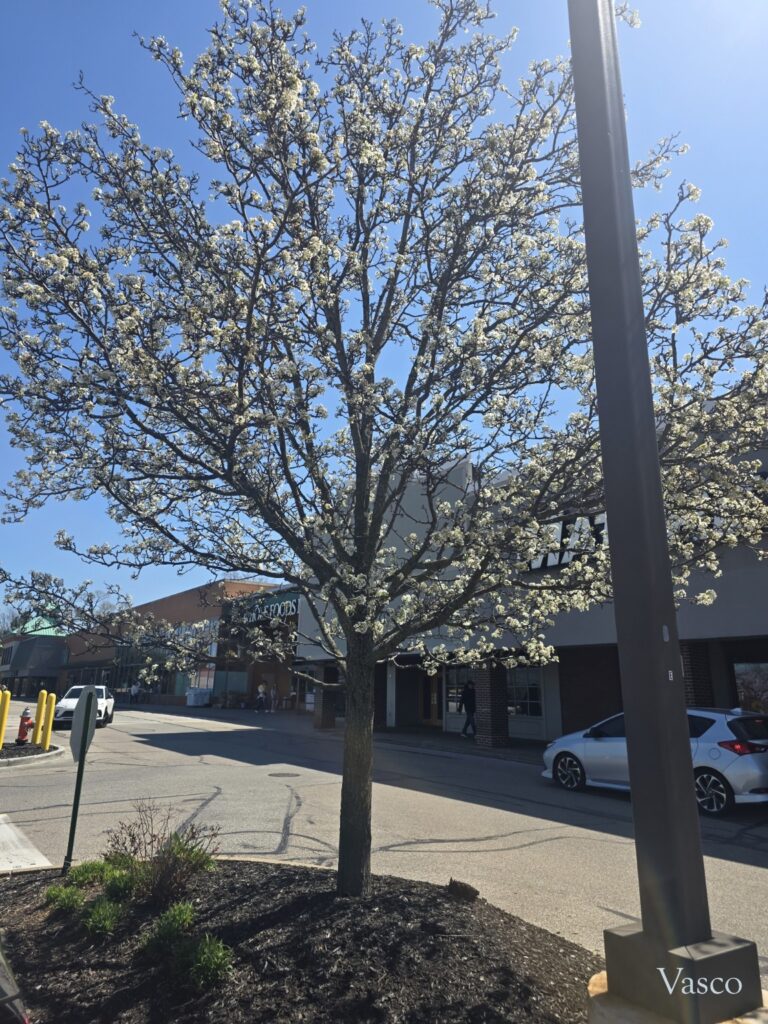
White blooms in early spring. Clean. Uniform. Almost pretty.
But they shouldn’t be there at all.
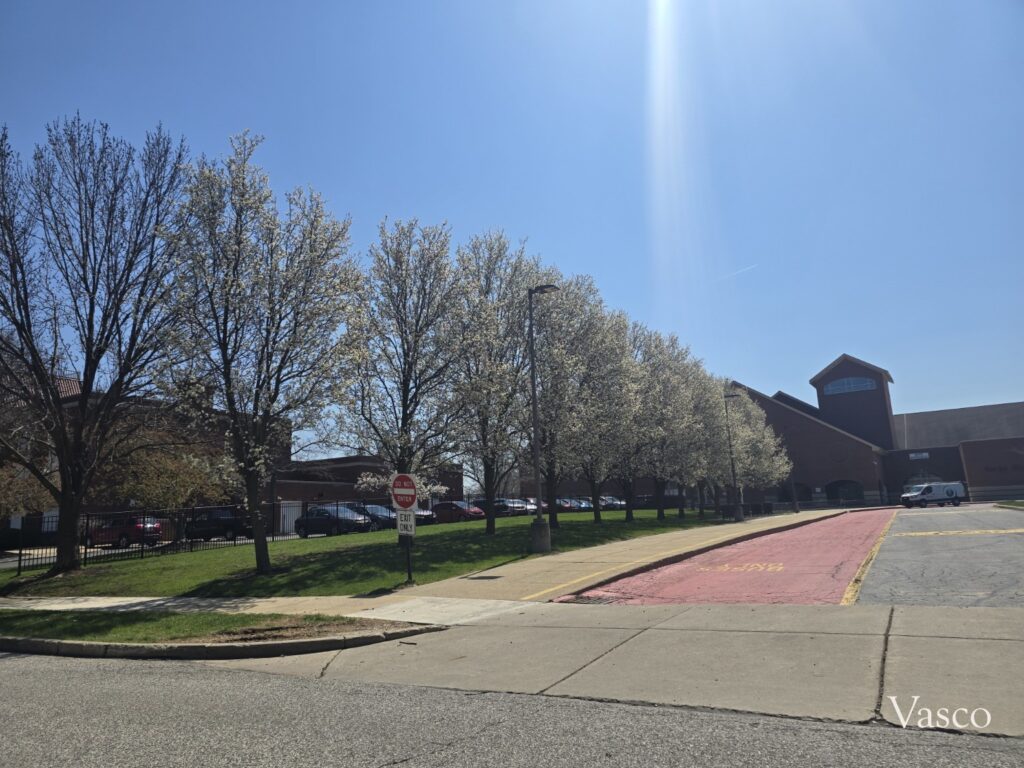
The Callery pear (including the popular cultivar Bradford pear) was officially banned in Ohio as of January 1, 2023.
It is illegal to sell, grow, or plant them.
On paper, that sounds like progress.
And in some ways, it is.
But here’s the part we don’t talk about enough:
There is no requirement to remove existing trees.
So what happens?
They stay.
They spread.
And they don’t spread slowly.
Many of them were planted on purpose.
In parking lots.
In subdivisions.
In front yards.
Along city-owned tree lawns.
Planted in large numbers.
Standard practice for years.
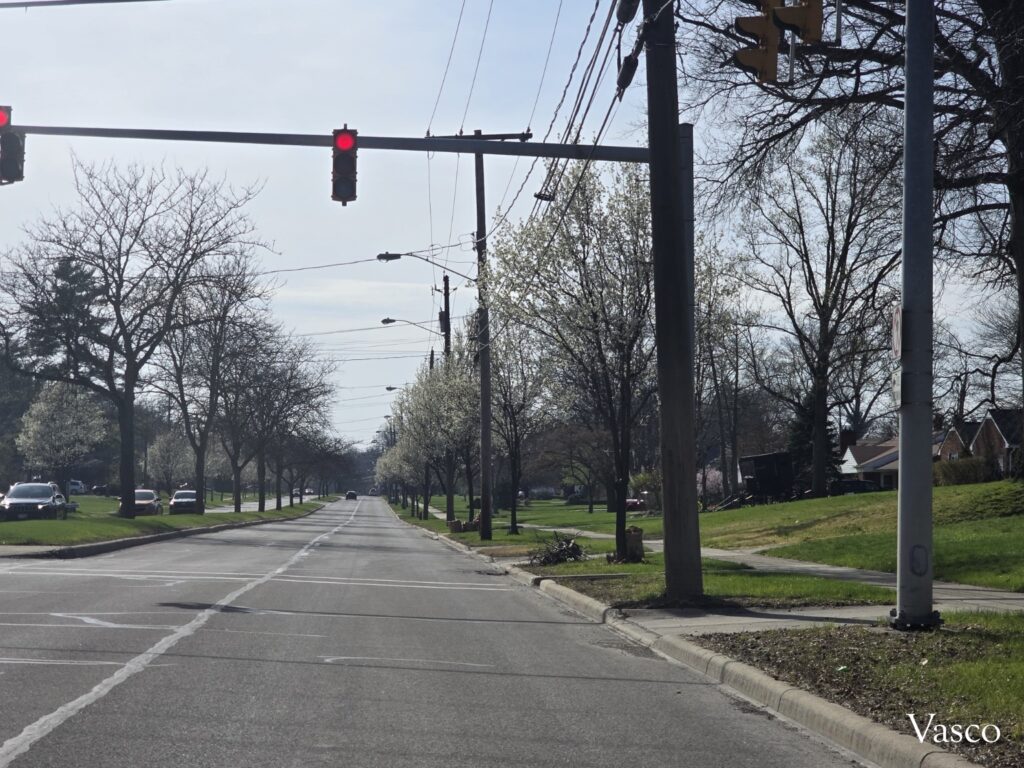
But many of the ones you’re seeing now were not planted at all.
They’ve spread into highway corridors.
They’ve taken over forest edges.
They’ve filled in open space around detention basins and unmanaged land.
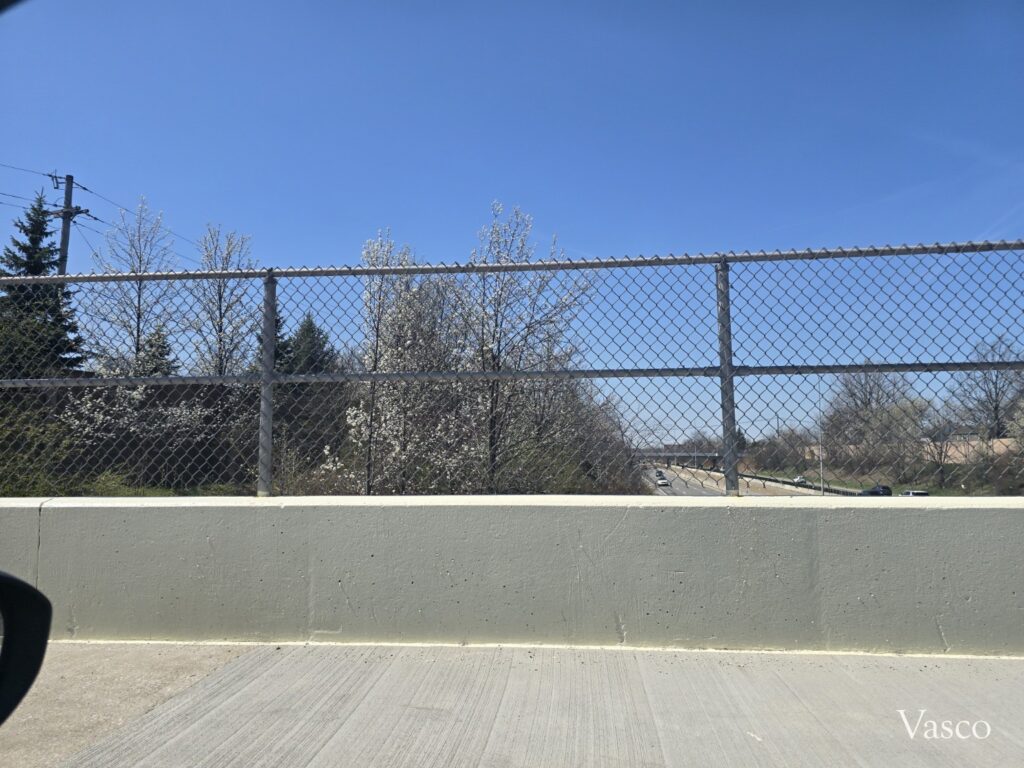
Callery pears are not just another non-native tree.
They are an aggressively spreading invasive vegetation species.
They outcompete native plants.
They form dense thickets.
They change the structure of entire ecosystems.
And they are very, very good at it.
So even though we stopped selling them in 2023…
The real expansion is just getting started.
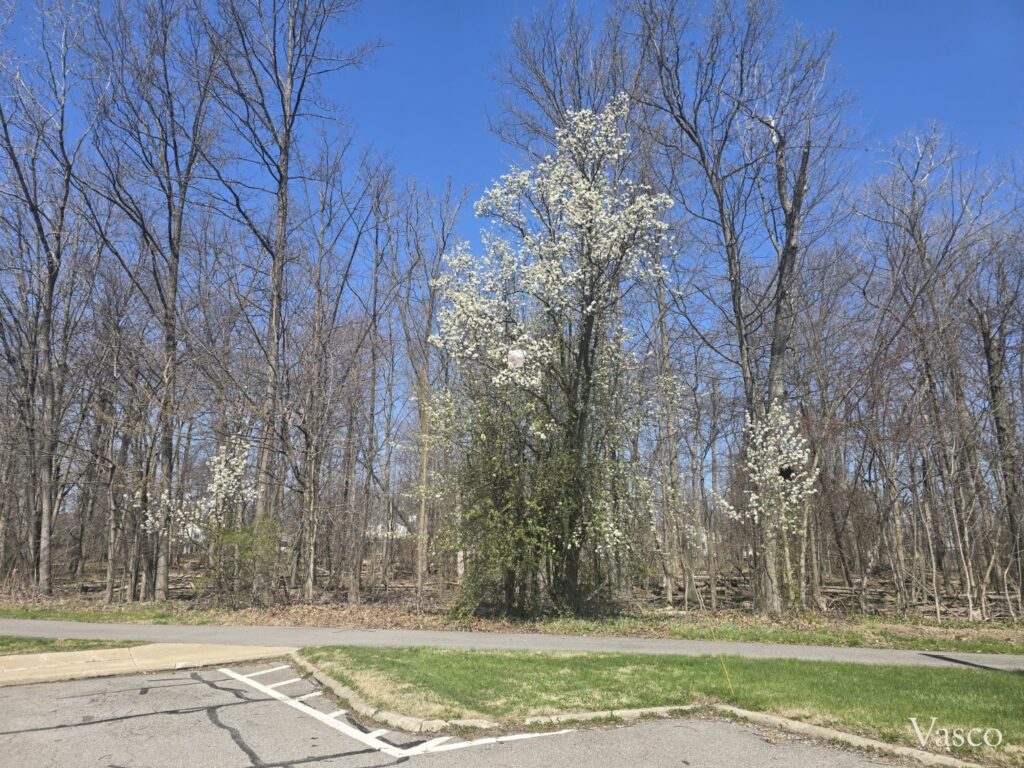
Because every existing tree is still producing.
Every year.
Spreading seeds farther.
Establishing new growth.
Creating the next wave.
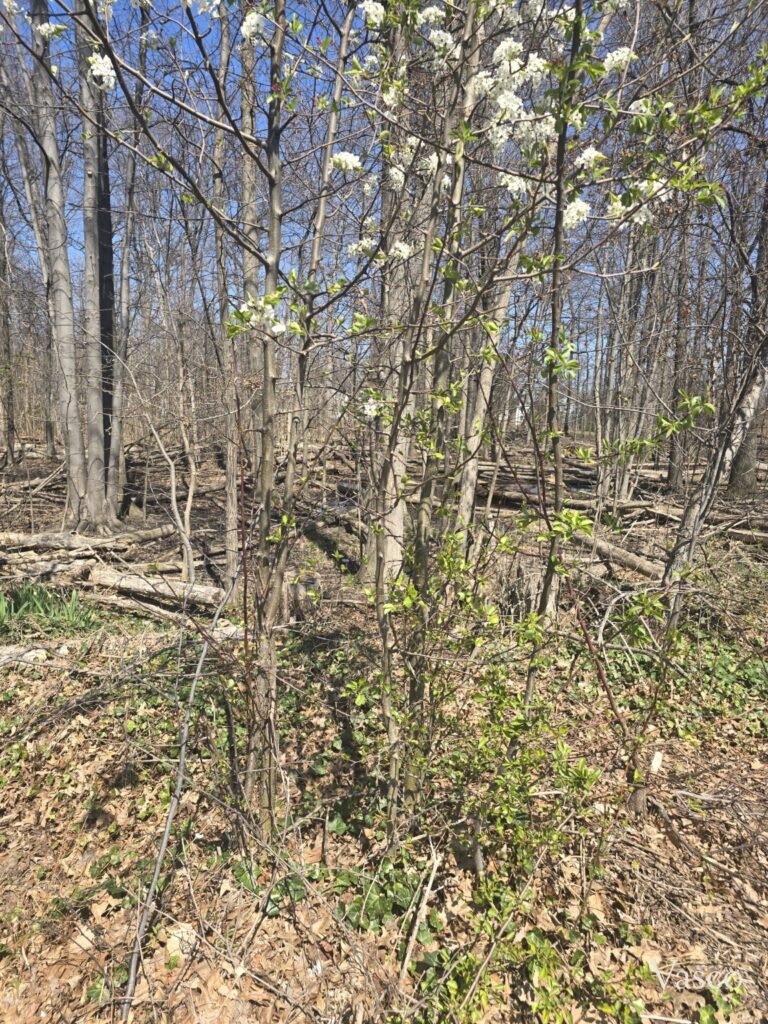
We banned the source.
But we didn’t address the system.
And this is something I see often.
Not just in environmental policy, but in life.
We take a step that looks like progress.
We check the box.
We say, “We fixed it.”
But the underlying issue keeps moving. Quietly. Steadily.
This also isn’t a situation without options.
If anything, it’s one of the more solvable problems we have.
Because every Callery pear that exists right now could be replaced with something better.
In parking lots, there are native options that still fit the scale and function. Trees like Allegheny serviceberry provide similar spring blooms, but also support wildlife and produce edible fruit.
Along tree lawns, there are strong native alternatives. American hornbeam. Flowering dogwood. Eastern redbud.
In residential landscapes, the options are even broader. From smaller trees like pawpaw to long-term canopy species like northern red oak.
Even along forest edges and highway corridors, where many of these trees have spread unintentionally, there are opportunities to restore native vegetation over time.
The issue isn’t a lack of alternatives.
It’s a lack of follow-through.
Without removal being part of the equation, these trees will continue to spread.
And over time, what is currently a widespread issue becomes a much larger one.
Harder to manage.
More expensive to address.
More embedded into the landscape.
We’ve seen this pattern before.
Small problems that are recognized early, but not fully addressed.
Left alone long enough, they don’t stay small.
Callery pear is one of those situations.
And we’re still early enough to do something about it.
Take a closer look this spring.
You’ll see it everywhere.